


As Jennifer Reid, co-CEO of Rival Group, noted during our recent webinar, “Memory rewrites emotion.”
Over time, people forget details and reinterpret experiences. Frustration softens, excitement fades and the small moments that seemed noticeable while something was happening become harder to remember once the experience is over.
There is a place and time for recall-based research. In fact, that is how much research today is conducted. But if the goal is to understand how people experienced a product, a store, an event or an advertisement in the moment, waiting even a few days can change the story people tell.
Time passed changes the story
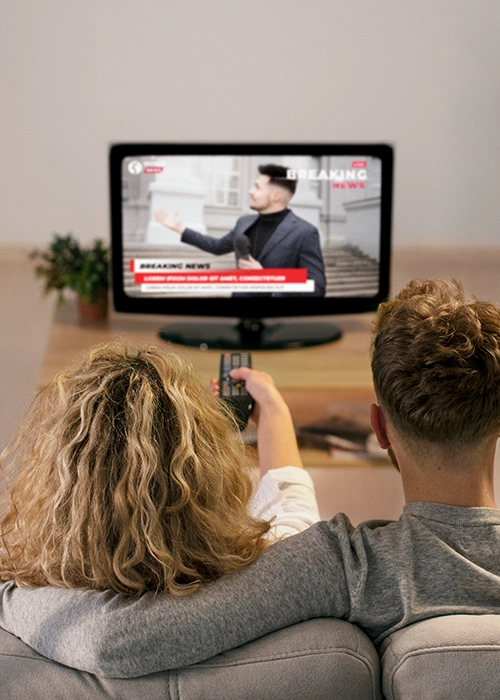
Our webinar illustrated this through a study conducted during Canada’s opening FIFA World Cup match. Participants answered questions while they were watching the game, and another group responded to many of the same questions several days later. During the match, emotions such as stress and frustration appeared alongside excitement and enjoyment. By the follow-up survey, “fun” had become the dominant memory of the experience while many of the sharper emotions had faded.
You can see the same pattern outside of sports. Someone walking through a redesigned retail store notices things they’ll never mention once they’ve been home for a few hours. The first bite of a new food product isn’t remembered the same way it’s experienced. A customer waiting for a meal reacts differently while they’re still waiting than they do after they’ve finished eating. These memories aren’t wrong necessarily, but they’re answering a slightly different question.
Research that fits into everyday life
The webinar also explored why mobile devices have become an effective way to capture in-the-moment feedback. As Demetre Eliopoulos, Senior Vice President & Managing Director, Research Services at Angus Reid Group, explained, “People will express themselves more authentically through their phones than they would in other environments.”
People already use their phones to text friends, share photos, record videos and react to what’s happening around them. Responding to research in that same environment often feels more natural than trying to reconstruct the experience hours or days later. It also allows researchers to ask about what participants are seeing, doing or feeling while it’s still happening rather than relying entirely on memory.
Different moments reveal different insights
Our FIFA study also highlighted how timing can change the way advertising is understood. Viewers remembered both the Coca-Cola and Lay’s commercials shown during the match, but they talked about them differently. Participants consistently described Coca-Cola’s advertisement as matching the emotions they were already experiencing during the game, while comments about the Lay’s commercial focused much more on recognizing Lionel Messi and remembering that it was entertaining.
Sports aren’t the only place this works. Consumers have recorded themselves tasting new snack products instead of describing the experience days later. Starbucks customers have shared feedback while they were still inside renovated stores. Restaurant guests have scanned QR codes before leaving their tables, and horse owners have documented their regular feeding routines as they happened. In each case, researchers captured reactions before people had time to reshape the experience through memory.
Asking at the right time
As Jennifer says, in-the-moment research “casts a pretty wide net in terms of its suitability.” It can be used for everything from in-home product testing and watch-alongs to intercept studies and QR code surveys. “Regardless of what your objective is,” she said, there are practices that help researchers capture experiences while they’re still unfolding.
Whether you’re studying a shopping trip, a product trial or a live sporting event, timing becomes part of the research design. A customer’s first impression of a redesigned store, the first bite of a new product or the tension during a close match all begin changing almost immediately.
Learn more about how audiences feel about in-the-moment research with our own research video and article capturing participant insights.
Recommended
Understanding the trade-offs shaping Canada’s energy debate
When Canadians think about energy, many don’t start from a fixed position. Angus Reid’s latest national study found the largest group takes a balanced, case-by-case approach. The largest group of respondents (39%) described their views as balanced or...
AI Is Everywhere in Daily Life – That Doesn’t Mean Canadians Trust It
In our latest wave of the Canadians and AI tracker, 70% of Canadians say they have used AI tools in the past three months. That number has held steady since late 2025, but the behaviour underneath it is shifting. More Canadians now report using AI daily, including a...
Web Summit Vancouver; Brands in uncertain times.
Recently, the CEO of his namesake company, the Angus Reid Group, took centre stage at the Vancouver Web Summit with the Global CEO of FCB, Tyler Turnbull. On the docket? Insights from their groundbreaking joint Citizen Consumer Research Study. What started as a...
The Moderators Takeaways: Brands in Uncertain Times: The Citizen Consumer Webinar
Trust and optimism used to rise and fall with the political tides. Not anymore. Both it seems have washed out to see. Our latest research reveals that a strong majority of Canadians and Americans no longer have confidence in their system of government. Nearly half of...